


Table of Contents
1.0 Introduction
Dear water resource managers, scientists, and other hydrophiles,
Fathom Scientific and Living Lakes Canada (LLC) and are excited to introduce you to WALLY, a comprehensive toolset designed to enhance our understanding of BC’s watersheds.
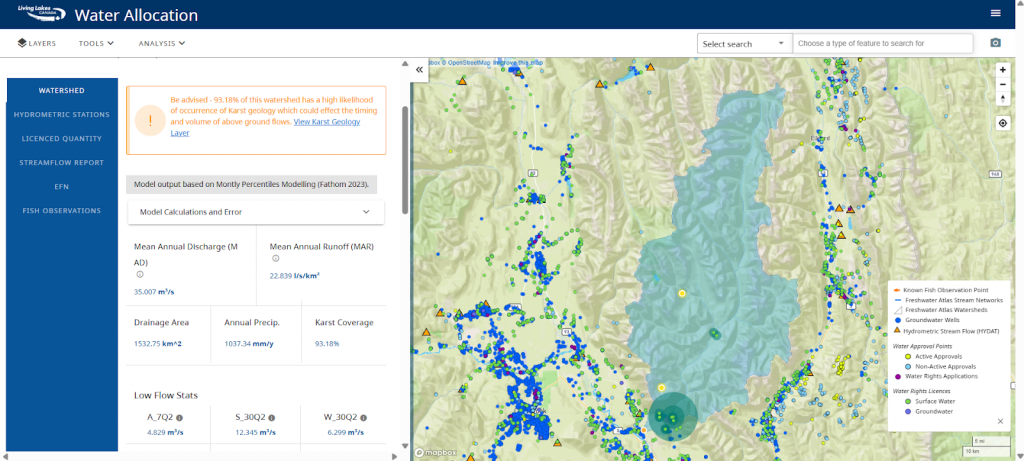
Figure 1 – WALLY watershed analysis interface
WALLY provides a wealth of information on surface water and groundwater availability, use, and licensing across British Columbia. Developed and hosted by Fathom Scientific with funding from Living Lakes Canada, WALLY integrates advanced watershed modeling to support water allocation, conservation, resource management, and more.
This document offers a quick tour and how to manual for much of Wally’s offerings. The site is currently running from 07:30 to 17:00 Monday to Friday.
Please give him a whirl at your leisure at wally.fathomscientific.com
2.0 Surface Water Analysis Tools
The Surface Water Availability toolset offers instant access to a variety of important watershed data. Get started with this under the “Analysis” tab. Start your query with the search function in the upper right of the Wally tool. Search by place name, station name, coordinates, street address, etc. and Wally will zip you to your location of interest. Or you can just use the map interface to guide yourself to your watershed.
To start an analysis, select “Analysis” and “Surface water availability”. The pointer will become a hand. Click on a delineated streamline in the map and the tool will begin its calculations. WALLY currently works best in smaller watersheds and can fail in larger watersheds, so best analyze watershed less than 1000km2.
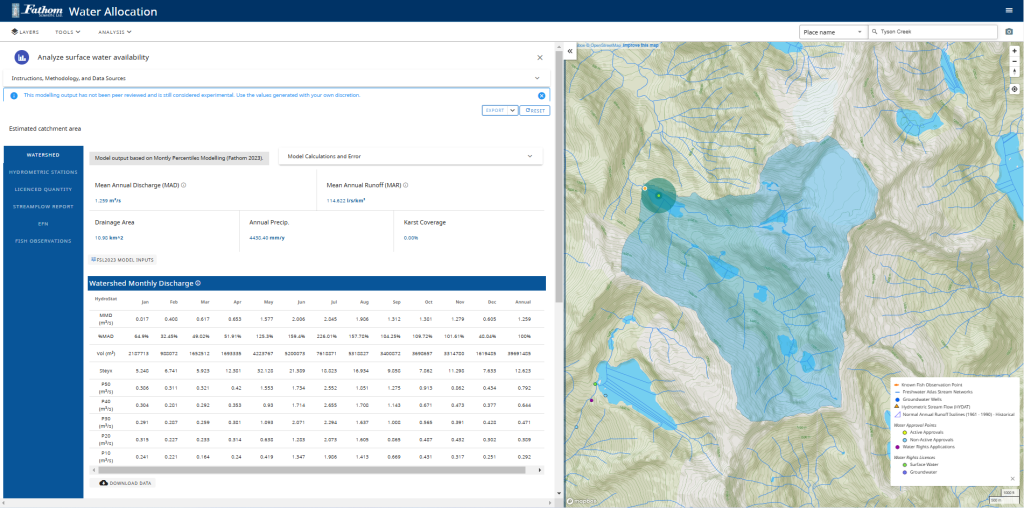
Figure 2 – WALLY watershed analysis output
After a few moments (larger rivers make take a few minutes), the tool will report back the watershed modeling results, along with a shaded blue catchment in the map window as shown in Figure 1.3.1. You can download this catchment as a shp. file from the “Export” box above the watershed results table on the left half of the page. You can also download an excel version of the watershed results.
Another useful output is the geo-spatial stats from the catchment, shown below. Wally calculates the 7 catchment parameters used for the regression analysis. Additionally, Wally reports the Hydrologic Zone (HZ) in which the selected point lies. The HZ is from the selected point of interest. If the user knows that the center of the catchment exists in a different HZ, they can enter the other HZ into this field. Indeed, it is possible for the user to enter any value into these boxes and re-run the model by clicking “Apply”, shown in Figure 1.3.2
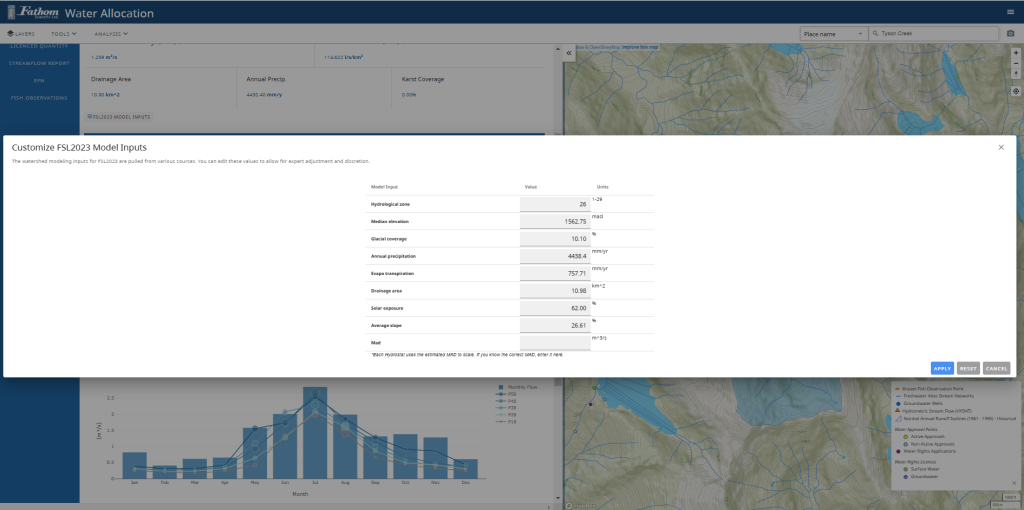
Figure 3 – Showing the catchment geo-spatial parameters. The user can change any of these parameters and hit “Apply” to rerun the model.
2.1 Environmental Flow Needs
Wally also includes a provincially developed EFN model comparing licensed use to estimated water availability. Quickly allowing water managers to estimate the amount of available water remaining in a system in each month of the year after all licensed withdrawals have been made.
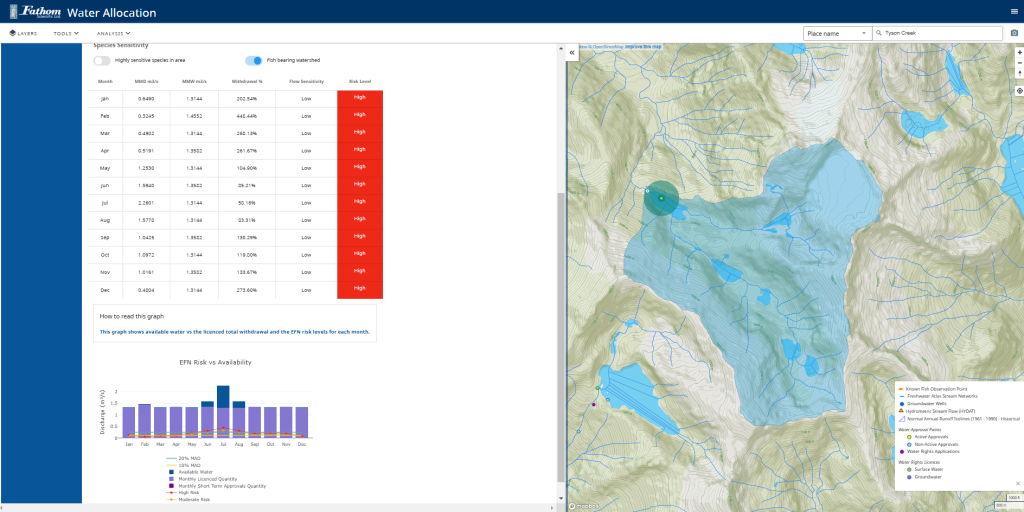
Figure 4 – WALLY Environmental Flow assessment pane
2.2 Estimating Uncertainty
Because the model is stochastic in nature, it is possible to estimate the uncertainty on every geo-stat. These are included in model output, under Model Calculations and Error, shown in Figure 5.
Model Calculations and Error shows the model co-efficents and offsets, along with HydroStat uncertainty (SteYX) in variable units For example, the MAR uncertainty is in l/s/km², and the Standard Error in Y(x) is simply 1 standard deviation. To get the full uncertainty in the P10/MAD, you must multiply this uncertainty by the MAD, and then add the uncertainty in MAD as per any error analysis. Error propagates forward as the sum of percent errors.
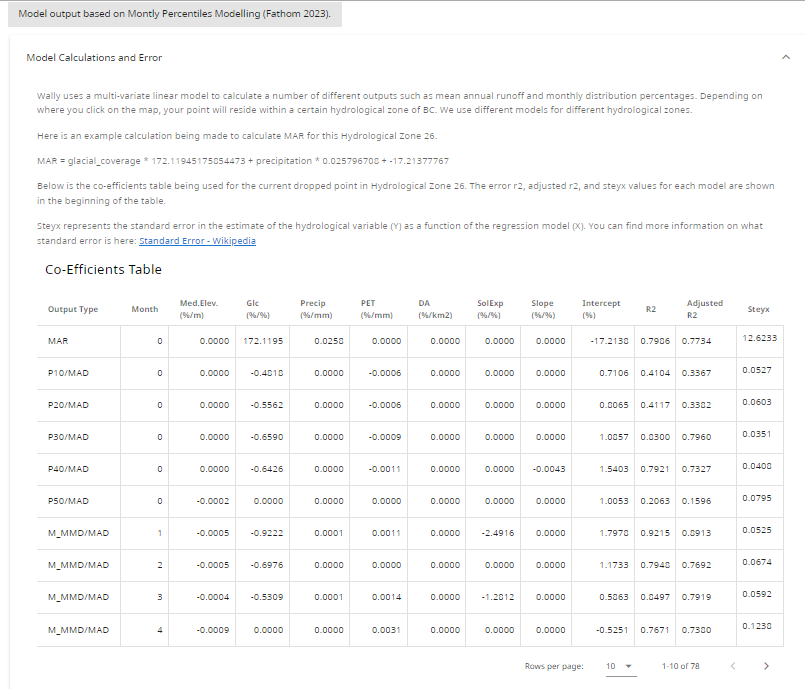
Figure 5 – Model output and uncertainties
In addition to the uncertainty analysis, Wally is hard at work showing where within the training data your study catchment resides. For example, Tyson Creek shown above has a median elevation of 1563 mASL, where the training data ranged from 1159 mASL to 1695 mASL in this HZ. The whisker-box plot shows that it is in the training range, unlike the Precipitation (PPT) and the Drainage Area (DA). When study site values are outside +/-15% of the training range, the value input to the model is throttled to +/-15% of the range, and the user is warned. For example, in the case of Tyson Creek, the drainage area of 10.98 km² (10^1.04) is throttled to the lowest value in the training set (10^1.365)*0.85 = 10^1.16. The Drainage Area of 1.98 km² is still used to multiply the Mean Annual Runoff (MAR) by to get Mean Annual Discharge (MAD), but the HydroStat models that use DA as a predictor variable in the Multiple Regression uses 10^1.16 instead of 10^1.04. This throttling was determined analytically to minimize extrapolation errors (Sentlinger, 2017b).
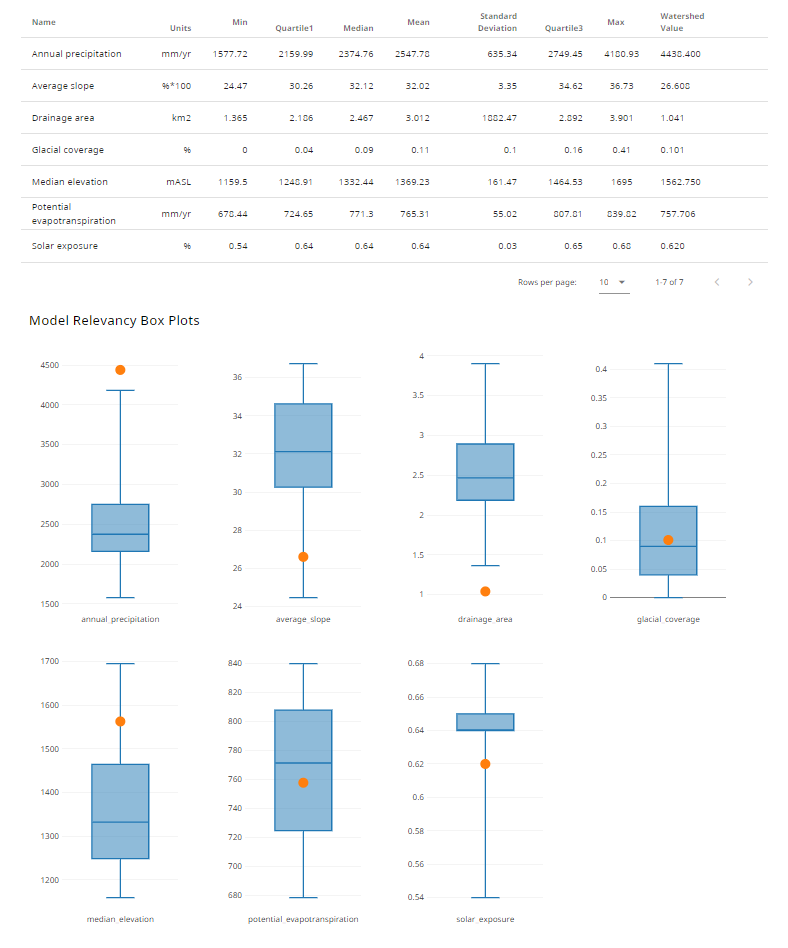
Figure 6 – Watershed Characteristics and Box Whisker Relevancy plots
3.0 Groundwater Analysis Tools
The two groundwater analysis tools, found under the “Analysis” tab, provide users with excellent information and visualizations about existing groundwater wells, as well as the potential interaction between wells and surface water.
The Cross Section Plot, shown below, allows users to quickly see how wells along a chosen path relate to each other in terms of depth, water level (as measured at time of construction), as well presenting Aquifer Lithology and material where available. All the wells shown are linked to the provincial database allowing quick access to more detailed information about each well. The visualization mode can be set to 2 or 3D modes depending on user preference.
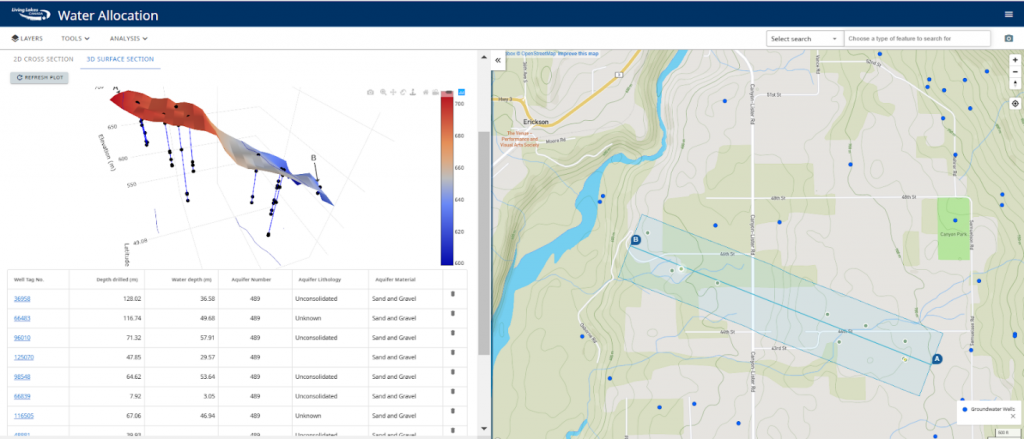
Figure 7 – Groundwater Cross section plot
The Hydraulic Connectivity Analysis (Figure 8) presents users with a starting point for evaluating interactions between a selected groundwater point and the surrounding streams. The tool calculates the distance to the ten nearest stream segments from the user selected point. It then identifies the closest point on each stream segment and uses the distance from these points to compute what the apportionment value is based on an inverse distance method.
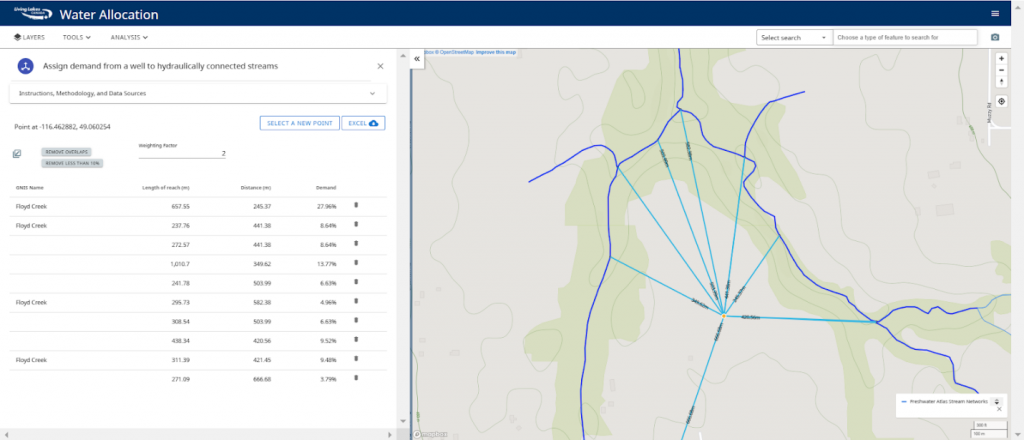
Figure 8 – Hydraulic Connectivity Analysis
4.0 General Tools and Layers
Under the “Tools” menu, users can select to search for water licenses or groundwater wells by selecting a point of interest or drawing a polygon around an area of interest. Users can also calculate distance and area on the map interface.
By clicking on the “Layers” tab users can select from a wide variety of geographic information to display in the map window.
5.0 Disclaimer
WALLY is a broad-based predictive tool. Outputs can vary in accuracy and should be used with caution. The Wally tool employs hydrological models that have not been published in a peer-reviewed journal.. Fathom is dedicated to continuous improvement of this system and is grateful for any suggestions for improvements or errors found.
6.0 Methods
WALLY uses publicly available Geo-Stats (Slope, %Glacier, PRISM PPT, %Solar Exposure, Median Elevation, Drainage Area, PET) to predict common Hydro-Stats based on a k-fold approach. [1] The k-fold approach may have been developed as early as 1931 (Larson 1931) but the exact origin is unclear (Wikipedia 2024). Fathom developed the modified k-fold approach independently. In this method, which is well suited to small datasets, we train a multivariate regression model with a randomly selected sample of the dataset (usually QA/QC’d WSC flow data) for a particular Hydrological Zone (HZ) based on HZs defined in Obedkoff & Coulson (1998). A HZ is defined as,
“An area with homogenous runoff characteristics where data can be reasonably extrapolated to estimate the characteristics at ungauged sites with an acceptable degree of accuracy. A hydrologic zone is typically identified based on physiographic features and/or a statistical study of hydrologic data. Due to the scarcity of hydrologic data in an extremely heterogeneous province such as British Columbia, this project used a physical mapping approach to delineate the hydrologic zones.”
from “British Columbia Regional Streamflow Inventory Reports” accessed Dec 18, 2024
The “Obedkoff” reports originally published in 1998-2001 provide the basis of the MkMGR approach. While Obedkoff used median elevation or Drainage Area to predict common Hydro-Stats, WALLY uses a similar approach while adding additional 5 additional geo-stats listed above. Updated reports regarding the hydrologic zone approach are available by the BC government here.
It’s important to note that most of the MkMGR models are normalized by Mean Annual Discharge (MAD). That means that to train the models, we divided all the hydro-stats first by MAD, and then trained the model. To get the model results, for S-7Q10 for example, it’s necessary to multiply by model results by MAD for this study site. This results in more accurate estimates of the hydrostat, relative to MAD, but means that that the total uncertainty is the sum of the %Hydro-Stat Uncertainty + the %Uncertainty for MAD. This allows the user to enter a known MAD if they wish to know the S-7Q10 for their site to improve the estimate. Also note that the estimate of MAD is also normalized by Drainage Area. We model the Mean Annual unit-area Runoff in l/s/km² and measure the Drainage Area. Yes, we are working on a paper for the method and the tool.
WALLY derives the study hydro-stats, using a Drainage Area (DA) calculated from DEM flow paths combined with FWA fundamental catchments, and Hydat flow stats derived using the R-Library FASSTR (Goetz et al 2024). The key filters employed to retain the largest possible dataset and minimal short-term effects are:
- >10 complete years of daily data,
- A calculated Wally DA within 20% of the Hydat DA AND
- <200%MAD Gross Allocation OR Net Allocation = Zero,
For a full discussion of these filters, along with the filters used by Ahmed, WSC (Hutchinson 2020), and a discussion of Naturalization, please see Sentlinger (2023). Regarding 2. If the DA calculated within Wally is outside of +/-20% of that calculated for the WSC station in Hydat, the training algorithm assumes of them is wrong and omits this WSC station in the training data. This approach strikes a balance between dataset size, recent climate change trends, and minimal regulation, with no controversial attempt to naturalize flows.
While WALLY’s streamflow predictions rely primarily on federally run flow monitoring, Living Lakes Canada is thrilled to incorporate five 10+ year discharge records collected by LLC and other community-based water monitoring programs to enhance the predictive abilities of the tool. These datasets which characterize the small basins in hydrologic region 21 – the Nelson, Kaslo, New Denver, Creston region significantly improved model performance and help build our understanding of these smaller watersheds that are essential for water resource use. As the Living Lakes flow monitoring programs continue, our high-quality data will continue to contribute to the WALLY tool and other modelling efforts.
Wally is currently hard at work writing his story for publication as a white paper that can be referenced. Wally insisted the methodology be transparent, defensible, and repeatable. Until that time, we proudly present this abridged version with a short introduction to the tools.
Additional reports about the inner working of WALLY can be found:
- Hydrological Modelling for the WALLY Project (2021)
- RSEA Hydrology and Allocation Baseline (2020)
- Monthly Q Percentile Modeling for WALLY Online Watershed Information Tool (2023)
7.0 Historically embellished History of WALLY
WALLY began the winding road of its existence as a government of British Columbia project in 2021 with the grand intention to bring hydrological Prediction in Ungauged Basins (PUB) to the People. Fathom Scientific, well known in the industry for pie-in-the-sky ideas, was contracted to imagine this beauty to life by developing the hydrological models intended to fill Wally’s brain with gleefully accurate discharge predictions! Some WALLY historians insist that Fathom was tracked down in a travelling carnival near Prague telling fortunes, however the truth is likely somewhere in between. But I digress…Hanging up his oracle’s robes, or Vancouver hipster fixy bike, whatever the truth may be, Fathom got to work spinning up the next iteration of the previously developed Modified k-fold Multivariate GeoSpatial Regression (MkMGR) models.
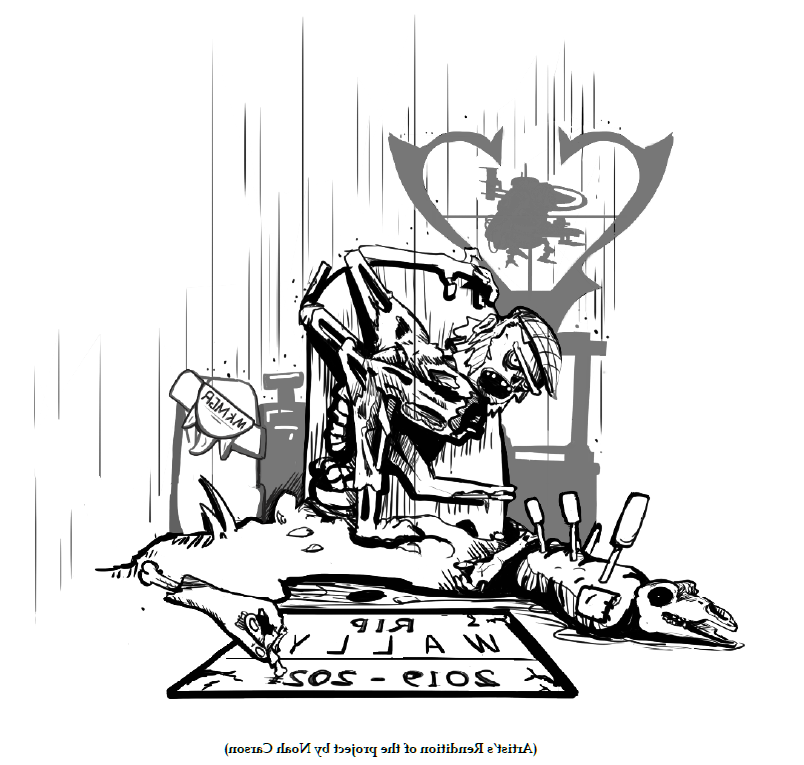
Figure 9 – Walter MkMGR, known affectionately to his friends as “Wally”, is seen rising from his slumber in the early morning rain after being reimagined by Fathom.
7.1 Walter MkMGR’s Origin Story: An Optional Fathomland Tall-Tale
Walter MkMGR started out as a sweet Scottish Highland lad, on the sunny shores of Nairnia, just west of Westerberg. He often found himself in trouble with the law due to his proclivity for monkeyshines. Upon graduation from Fathom Highlands High in 1912, with honours in machining, he signed up with the Black Watch (the Fathom Highland Fuseliers) as a submarine mechanic, and volunteered for active duty against the little known Threat of Morsem Nuclear subs in the Black Sea. Wally proved his mettle during a freak nuclear meltdown, caused when somebody’s (nobody claimed responsibility) grilled cheese sandwich, which was grilling on a nuclear core, slipped between two plutonium rods and caused them to overheat. Wally (who just happened to be nearby) sounded the alarm and attempted to retrieve the grilled cheese sandwich while his fellow seamen escaped. The story goes that he did retrieve the sandwiched sandwich, but was badly poisoned by radioactivity in the process (there was also tell of a large bite out of the grilled cheese). His seaman friends found him unconscious, with crumbs on his mouth, in the nuclear core, and stark naked (no explanation given). After a lengthy convalescence (where he met, wooed, and fell in love with his nurse Esmerelda LeCove) he was startled one day to find a lump growing from both his armpits. “Swollen lymph nodes,” said the doctors skeptically. But the lumps grew and before long, Wally had sprouted 2 additional arms.
Shun from traditional society, and eschewed by Esmerelda, he moved north. There he wandered the hills, and learned the lay of the land, the movement of the water across the land, and the affect of the slope, elevation, drainage area and solar exposure on the timing and volume of runoff. He met an old man in the mountain hills, Murray, Old Man Murray, who taught him to play the bagpipes and together they fashioned a set for Wally. Old Man Murray had been confined to his cave in the Carleton mountains for decades, where he studied the advanced topics of Potential EvapoTranspiration (PET) Precipitation (PPT), and Glaciers (GLC). While his initial attempts at playing were met with more scorn and even further shunning, like most bagpipers he continued on, loudly, resolutely, paying no attention to social cues until the locals expected to hearhis shrieking melodies each morning. The particular tune would foretell of floods and droughts, 10% Percentile flows and Summer- 7day average 10 year return monthly flows. Together Wally and Murray roamed the highlands giving council to local hamlets, townships, and even on occasion the grand metropolis of Meganopolis.
Figure 1.1.0 Wally MkMGR in full hydrological regalia, pointing to his adversary.
With the tales of their prophecies in ungauged basins traveling far and wide, King Nick of Everard caught wind of his abilities. King Nick had spent several years perfecting a beast to predict flows, incorporating the Dark Magik of his Sorcerer Zorkin. The Magic was known only as XGBoost and Archmage Zorkin created a beast, half shark, half automon, and embued it with the power of XGBoost. King Nick wished to be entertained and to entertain his subjects. In the Christmastime of 1921, he invited various mages from around Fathomland to face his beast in the arena of hydrological prediction. The beast was enormous, measuring 17′ in height and almost as wide, in girth, but only 15′, so… pretty close.
XGBoost destroyed the other champions, tearing them limb from limb with obscure terms like “gain” and “coverage”. The black neural net would shoot out on the competitors and blind them to reason until they squirmed in a mealy mess of near perfect predictions. The glass dome would retract painfully slowly and then… consumption. MkMGR likewise wasted through his competition with his added appendages and striking cacophony, competitors like the slipper NEWT fell by his wayside. The carnage continued until only two remained: Walter MkMGR the young upstart from the Highlands, and XGBoost, the mechanized monster of methodic mayhem.
The final match was planned for Christmas Day,
1.1.1 King Nick’s Shark-Based Monstrosity: XGBoost
All the Fathomlanders had gathered to watch the dark magik of AI and Neural Networks compete with the rural knowledge of MkMGR. XGBoost came on quickly firing multiple network nets at MkMGR, trapping him in a neural fog where he could only see results and no process. He was able to cut through the net with his visual learning skills, untangling the results into multiple 2D plots. The beast drew back, gnashing his serrated teeth in his glass dome, his black eyes smelling fear. Old Man Murray yelled from the stands where he watched, “Use your pipes man!” And Wally began to play. At first a coarse bleating, then a soft whining, and again, a coarse bleating growing in intensity, drowning out the cries of the assembled crowds who demanded blood. The monster recoiled in horror. Knowing only victory, it slowly opened its glass dome and charged MkMGR. Unfortunately, it moved at a glacial pace. The whole charge took an excruciatingly long time, months longer than expected, and most of the spectators went home. While XGBoost charged and Wally played, the entire court lost interest, funding for the event was pulled, and King Nick moved onto other interests. By the time XGBoost reach MkMGR they were both exhausted, desiccated, and starving. Both perished on the battlefield where nobody saw them die. It was absolutely, hands down, the worst story climax ever.
The custodians cleaned up the coliseum and buried the bodies in a nearby graveyard, the MIT-OS Graveyard for Bright Ideas. The graveyard was never visited, but for one cloaked stranger. It was Sir McBabakaiff! In a previous life, Scotty McBabakaiff had been Wally’s boxing coach, but was now the patron saint of lost causes (his official title when knighted by King Nick). He brought enchanted flowers to MkMGR’s grave, and muttered a dark language, the language of government bureaucracy, while he poured a small dribble of water from the Pitcher of March Madness on the grave. Late that night, a brittle humerus shot through the daisy plagued earth. It pulled its sinewy frame from the earth, and slowly, the 6 limbed Wally MkMGR rose from the grave where he’d been unceremoniously buried. But the spell cast by the Mage (!) McBabakaiff was government funded and quickly evaporated. Wally, only newly risen, fell back to the earth in a pile of bones. But miraculously, a nearby enchanter, The Magnificent Saso (who founded SasoTech University, but was subsequently voted out by the board of directors, who The Magnificent Saso is suing for Breach of Trust in Fathom Small and Petty Claims Court) cast another funding spell on Wally and he shuddered alive again. Alas, the spell was also weak, allowing Wally to roam around the grounds playing his windy bagpipes from 07:30 to 17:00 Monday to Friday.
As a visitor to Fathomland, you may take Wally for a walk, ideally on a leash pole to prevent him from consuming you. Enjoy! and Stay Safe!
3.0 References
Ahmed, A. (2015). “Inventory of Streamflow in the Omineca and Northeast Regions”, February 2015, Knowledge Management Branch, British Columbia Ministry of Environment, Victoria, B.C.
Beven, K., and P. Young (2013), “A guide to good practice in modeling semantics for authors and referees” Water Resour. Res., 49, 5092–5098, doi:10.1002/wrcr.20393.19
Climate Analysis Service at Oregon, (2005). “State University Climate Mapping with PRISM”, www.climatesource.com.
Chapman, A. B. Kerr, and D. Wilford. (2012). “Hydrological Modelling and Decision-Support Tool Development for Water Allocation, Northeastern British Columbia” BC Oil and Gas Commission, Victoria, B.C.
Chapman, Allan R., Ben Kerr, and David Wilford. (2018) “A Water Allocation Decision-Support Model and Tool for Predictions in Ungauged Basins in Northeast British Columbia, Canada” Journal of the American Water Resources Association (JAWRA) 1–18. https://doi.org/10.1111/1752-1688.12643
Daly, C., W.P. Gibson, G.H. Taylor, G.L. Johnson and P. Pasteris. (2002). “A Knowledge-based Approach to the Statistical Mapping of Climate.” Climate Research, Vol. 22, pp. 99-113.
Goetz, Jon, Carl James Schwarz, Sam Albers, Robin Pike (2024). “fasstr: Analyze, Summarize, and Visualize Daily Streamflow Data” CRAN https://cran.r-project.org/web/packages/fasstr/index.html
Hutchinson, Dave.(2020) Personal Communication.
Moore, R.D., Trubilowicz, J. and Buttle, J. (2012). “Prediction of streamflow regime and annual runoff for ungauged basins using a distributed water balance model; 61 Journal of the American Water Resources Association. Vol 48, Issue 1, pp 32–42, February 2012
Larson S. (1931) The shrinkage of the coefficient of multiple correlation. J. Educat. Psychol., 22:45–55, 1931.
Lindsay JB. 2016. The practice of DEM stream burning revisited. Earth Surface Processes and Landforms, 41(5): 658-668. DOI: 10.1002/esp.3888
Obedkoff, W. (2003) “Streamflow in the Lower Mainland and Vancouver Island Region”. Vancouver, Province of British Columbia, Ministry of Environment, Lands, and Parks
Obedkoff, W and C.R. Coulson, 1998 “British Columbia Streamflow Inventory” Water Inventory Section. Resources Inventory Branch March, Victoria, B.C.
Province of British Columbia (2024) British Columbia Regional Streamflow Inventory Reports https://www2.gov.bc.ca/gov/content/environment/air-land-water/water/water-science-data/water-data-tools/provincial-hydrology-program/resources/streamflow-inventory
Sentlinger, G. (2010) “Regression Analysis for Streamflow Hindcasting”, Canadian Society of Hydrological Sciences Working Group, Vancouver, B.C.
Sentlinger, G. (2015) “MFLNRO South Coast Drought Response 2015: Prioritization for Monitoring and Mitigation” Presented at CWRA Vancouver Conference, Richmond .B.C.
Saunders, W. 1999. Preparation of DEMs for use in environmental modeling analysis, in: ESRI User Conference. pp. 24-30.
Sentlinger, G.I. and Christina Metherall. (2016). “South Coast Stewardship Baseline (Brem, Fraser Valley South, Toba, Upper Lillooet) REV 1.0 Contract GS16LMN-018 (Nov 16, 2016)” Aquarius R&D Inc. Vancouver, B.C.
Sentlinger, G.I, Christina Metherall, and Adam Valair.(2017a) “Stewardship Baseline: Water Allocations for Watersheds in the South Coast Region” Aquarius R&D Inc, Vancouver, B.C.
Sentlinger, G.I. (2017b) “Re: Extrapolation of South Coast Hydrology Model” Jun 29, 2017 Letter Report for Ecofish Research Ltd.
Sentlinger, G.I. and Christina Metherall. 2020 “RSEA Hydrology and Allocation Baseline REV 1.0.3 (Feb 10, 2020)” Vancouver, B.C.
Sentlinger, G.I. (2023) “Monthly Q Percentile Modeling for WALLY Online Watershed Information Tool
Contract GS23LMN0040 Version 0.3 (Mar 31, 2023)” Fathom Scientific Ltd Vancouver, B.C.
Trabucco, A., and Zomer, R.J. (2009) Global Aridity Index (Global-Aridity) and Global Potential Evapo-Transpiration (Global-PET) Geospatial Database. CGIAR Consortium for Spatial Information. Published online, available from the CGIARCSI
GeoPortal at: http://www.cgiar-csi.org/data/global-aridity-and-pet-database.
Trubilowicz, J.W., R.D. Moore, and J.M. Buttle (2013) “Prediction of streamflow regime using ecological classification zones.” Hydrological Processes 27: 1935–1944. Wikipedia, “Verification and validation” Accessed Jan 31, 2020.
Wikipedia (2024) at: https://en.wikipedia.org/wiki/Cross-validation_(statistics)#cite_note-McLachlan-15
Wiley, J. B., Curran, J. H., Alaska. Dept. of Transportation and Public Facilities., Geological Survey (U.S.). (2003). “Estimating annual high-flow statistics and monthly and seasonal low-flow statistics for ungaged sites on streams in Alaska and conterminous basins in Canada.” Anchorage, Alaska: U.S. Dept. of the Interior, U.S. Geological Survey.
